



FDA Medical Device Classes Explained: What Manufacturers Need to Know in 2026


An in-depth guide to how the U.S. Food and Drug Administration classifies medical devices, why it matters, and what each class means for product development and market entry
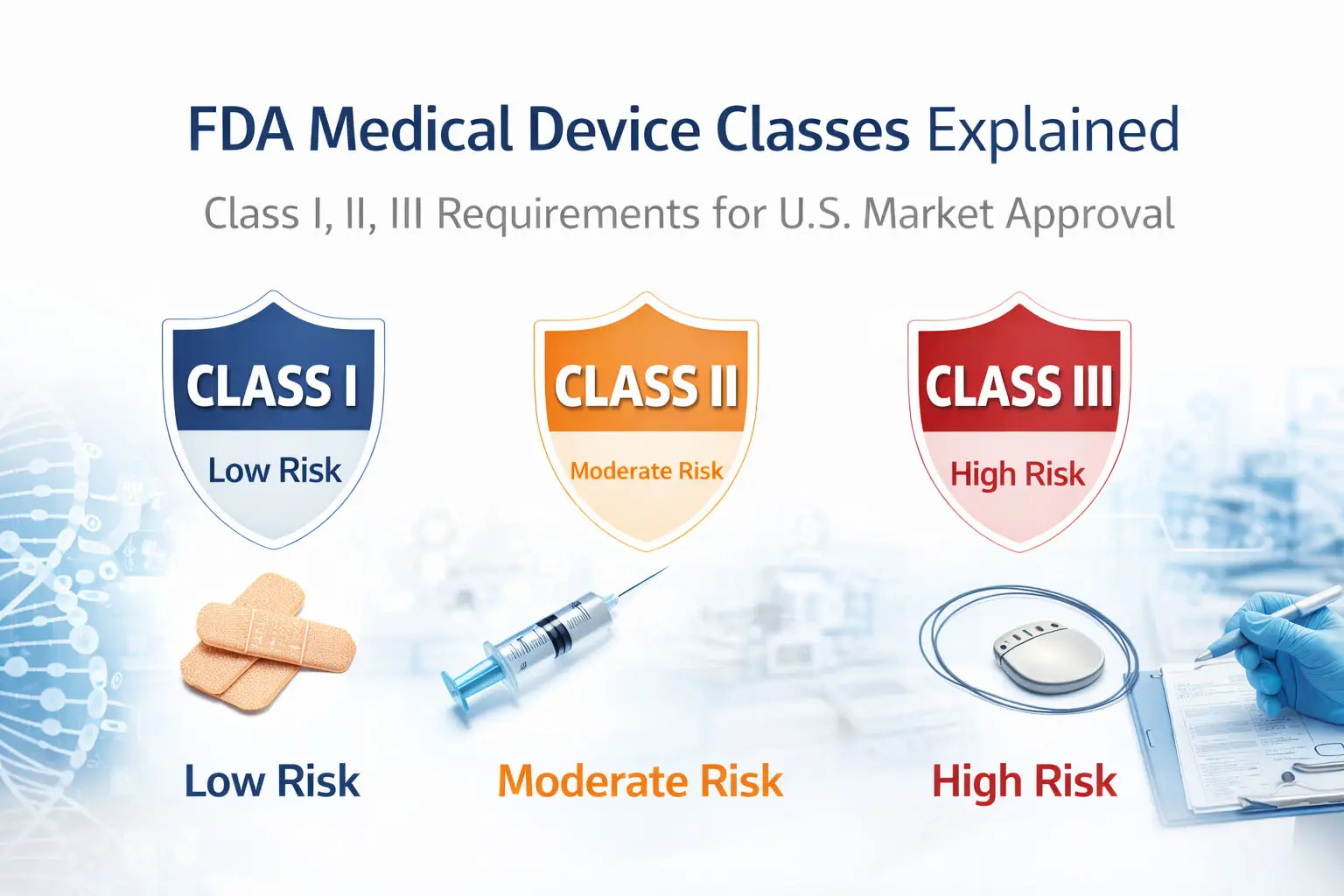
Developing medical devices for the U.S. market requires a clear understanding of the U.S. Food and Drug Administration (FDA) medical device classification system — a foundational framework that determines how regulators assess device risk and the corresponding regulatory requirements. The FDA assigns every medical device one of three risk-based classes: Class I, Class II, or Class III, with each category indicating progressively higher safety oversight and data requirements.
In this article, we unpack the FDA’s classification system from a risk and compliance perspective so manufacturers, innovators, and OEM partners can strategically plan regulatory strategy and development timelines.
Why Classification Matters
The FDA classifies medical devices to establish the appropriate level of regulatory control needed to provide reasonable assurance of safety and effectiveness. Classification directly affects:
-
The regulatory pathway (e.g., whether a 510(k) submission or Premarket Approval (PMA) is needed)
-
The data, testing, and documentation required prior to market entry
-
The time and cost associated with approval and ongoing compliance
Because the risk and intended use of a device determine its classification, developers must understand this system early in product planning to avoid costly delays.
How the FDA Defines Device Classes
According to the FDA and regulatory frameworks, medical devices are sorted into three key categories based on potential risk to patients and users — from lowest to highest.
Class I — Low Risk, Fundamental Controls
Class I devices pose the lowest level of potential harm and are subject primarily to general controls, which are baseline regulatory standards that apply to all medical devices. These include proper labeling, facility registration with the FDA, adherence to Quality System Regulations (QSR), and basic manufacturing practices.
Most Class I devices do not require a premarket notification (510(k)), meaning they can enter the market after registering and listing with the FDA — provided they comply with general controls. Examples in this category include simple instruments such as tongue depressors and elastic bandages.
Key takeaways:
• Minimal risk to patient health
• General controls only
• Most devices exempt from 510(k) submission
Class II — Moderate Risk, Special Controls
Class II devices present a moderate level of risk beyond what general controls alone can address. To ensure safety and effectiveness, these devices are subject to both general controls and additional “special controls.” Such controls may include performance standards, specific labeling requirements, and enhanced post-market surveillance systems.
For most Class II devices, manufacturers must submit a 510(k) Premarket Notification to the FDA and demonstrate that their device is substantially equivalent to a legally marketed predicate device. Examples include infusion pumps, powered wheelchairs, and many diagnostic tools.
Key takeaways:
• Moderate patient risk
• Special controls supplement general controls
• Most devices require 510(k) submission
Class III — High Risk, Premarket Approval (PMA)
Class III devices carry the highest potential risk because they are often life-sustaining, life-supporting, or critical to patient health. For these devices, the FDA requires the most stringent regulatory pathway: Premarket Approval (PMA).
The PMA process demands comprehensive data — often including clinical study results — demonstrating safety and effectiveness for the intended use. Given the complexity of Class III products, this pathway generally requires significant investment, detailed scientific documentation, and close FDA review. Typical examples include implantable pacemakers, artificial heart valves, and deep brain stimulators.
Key takeaways:
• Highest risk category
• General controls + special controls + PMA required
• Full scientific evidence is mandatory
Regulatory Pathways & Strategic Planning
Understanding classification isn’t just academic — it directly influences how a product reaches market:
510(k) Premarket Notification
A common pathway for Class II (and occasionally some Class I devices) is the 510(k) route. Here, manufacturers must demonstrate that their device is substantially equivalent to a previously cleared device, meaning similar intended use and technological characteristics. Successfully navigating 510(k) clearance can often take several months, depending on the device and supporting data.
Premarket Approval (PMA)
The PMA pathway is reserved primarily for Class III devices and demands a significantly higher quantity and quality of evidence — including clinical and laboratory data. The process can take a year or more and often involves iterative discussions with the FDA.
How Devices Are Classified
Classification isn’t random. The FDA maintains comprehensive classification panels grouped into different medical specialties (e.g., cardiovascular, diagnostic imaging, orthopedics) under Title 21 of the Code of Federal Regulations (CFR). Manufacturers can search databases by device code or description to identify the applicable class.
In practice, the classification process balances intended use, invasiveness, and risk. It’s essential to determine the correct category early to guide design controls, testing plans, and regulatory submissions effectively.
Why It Matters to Manufacturers
For medical OEMs, contract manufacturers, and innovators targeting the U.S. market, understanding FDA medical device classification is crucial for:
• Regulatory strategy: Choosing the right submission pathway saves time and minimizes costly delays.
• Design and testing planning: Class categories define what types of performance and safety evidence are needed.
• Quality systems alignment: Risk-based classifications map to quality requirements under ISO 13485 and FDA QSR regulations.
Many manufacturers also adopt robust quality management systems (QMS) and design controls that align with classification expectations long before final submission.
Conclusion: Building Compliant Products for the U.S. Market
The FDA’s medical device classification system — spanning Class I, II, and III — serves as the backbone of regulatory compliance for devices marketed in the United States. By assessing risk and aligning regulatory pathways with classification requirements, manufacturers ensure their products meet safety and effectiveness standards while navigating complex approval landscapes.
Whether you’re planning to bring a simple diagnostic tool (Class I) or a life-sustaining implantable device (Class III) to market, early classification assessment is one of the most strategic decisions in your product development process. Understanding the differences between classes and the implications for regulatory submissions ultimately helps companies reduce risk, optimize development timelines, and position products successfully in one of the world’s largest medical markets
Submit Your Request
Recent Posts

Tags
- Adult Diapers
- Are custom medical devices safe
- Baby Diapers
- Can respiratory anesthesia be used
- Digital Healthcare
- Do you offer customized consumables
- European Market
- How do you take care of a skin wound
- Industry Trends
- Lady Sanitary Napkins
- Medical Devices
- OEM Medical Devices
- Product Introductions
- Protective Equipment
- Under Pads
- What are custom-made medical devices
- What are diagnostic products
- What are hospital dressing products
- What are medical tube catheters
- What are some common protective equipment
- What are the appropriate applications for hospital dressing products
- What are the appropriate uses for protective equipment
- What is a gynecological examination
- What is a medical consumable
- What is an anesthesia kit
- What is an OEM in medical devices
- what is an wound skin care
- what is can disposable ultrasonic diagnostic
- What is good manufacturing medical devices
- What is hospital-grade protective equipment
- what is medical equipments hospital furniture
- What is medical sterilization wrapping
- What is rehabilitation equipment device
- What medical consumables do you supply
- Where can I find laboratory consumables wholesale
- where can I find medical protection device
- where to buy hypodermic accessories
- where to buy medical apparel
- where to buy medical consumable accessories
- where to find OEM medical device supplier
- where to find rehabilitation equipment supplier
