



Soft Tip, Scale Line: Tracheal-Safe Airway Management Consumables


Airway Management Consumables play a quiet but critical role in intensive care. Millions of patients need ventilators to stay alive, to receive oxygen, and to help keep their airways open and help clear mucus. Repeat suctioning of the airway has long term negative effects. For years, airway suctioning has had a problem that has gone neglected: suctioning injures the tracheal mucosa.
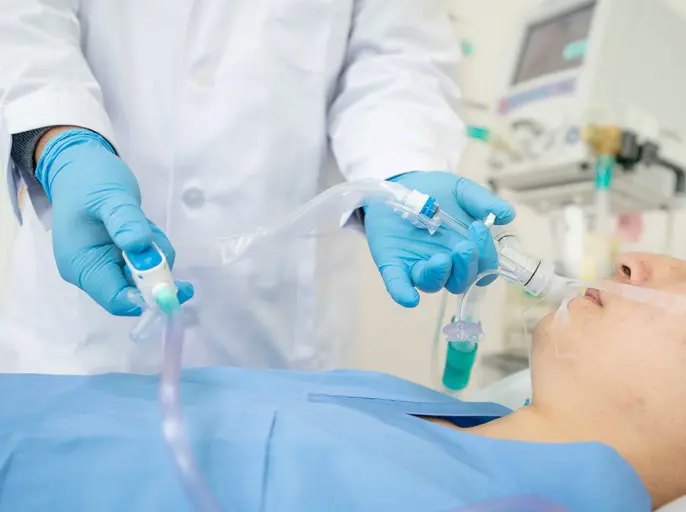
This article will demonstrate the importance of safety in catheters that have a soft tip, in addition to how the designed built-in scale lines, and how the contemporary airway management tools of consumables are adapting to lessen the injury of airways while keeping the necessary speed and productivity of the stakeholders.
What Is Injury of the Tracheal Mucosa?
The tracheal mucosa is a fine-lining membranes that is located on the internal of the trachea. It's the barrier that stands in front of the trachea and helps to prevent the infection and sumping of the airway mucus. It helps keeps the airway secretions flowing. When a suction catheter is inserted multiple times a day—sometimes dozens of times—the tip can scrape, irritate, or even tear this lining.
Clinical studies have documented the problem clearly:
• 57% of mechanically ventilated patients show signs of laryngeal or tracheal mucosal injury after just 24 hours of intubation
• 29% of ICU patients develop oral or tracheal mucosal pressure injuries during their ventilation period
• Repeated trauma increases the risk of granulation tissue formation, subglottic stenosis, and ventilator-associated pneumonia (VAP)
These numbers are not rare complications. They are daily realities in ICUs worldwide.
Why Traditional Suction Catheters Cause Injury
Conventional closed suction catheters often have rigid, blunt tips. The design logic was straightforward: make the catheter strong enough to pass through the endotracheal tube without kinking. But strength came at the cost of gentleness.
Standard catheter problems:
1. Catheter friction due to the rounded tip: Friction occurs when the back end of the trachea is hit by the rounded tip.
2. Insufficient insertion depth control: The absence of adequate markings may lead the clinician to insert the catheter deeper, distally ending at the carina or bronchus.
3. Trauma of a recurrent nature: The suction passes transmit micro-damage, and that damage becomes permanent after continuous ventilation.
The end consequence is a cyclic reaction of injury and inflammation causing an increase in mucous secretion and increasing the need for suction.
Soft tip: Less Friction and Improved Functionality
One of the innovative methods of the modern consumables in the management of Airway is the soft tip of the catheter. The closed suction catheter by Greetmed has a soft tip engineered to:
• Possess mechanical friction of a lower degree: It scrapes less as the compliant material glides along the mucosa.
• Possess lower resistance to insertion: Using a tip that glides easily, clinicians are less likely to feel the need to apply excessive force.
• Possess a decreased micro-tear effect: Contact with lower softness translates to less disruption to epithelial cells after repeated insertions.
The evidence in the clinic fully supports this design. A prospective randomized study comparing an improved closed-suction catheter (with a softer, more flexible tip) against a conventional design found that the improved catheter significantly reduced tracheal mucosal injury grades—from a median grade of 2 to a median grade of 1 (p=0.001).
In practical terms, this means fewer visible injuries on bronchoscopy, less bleeding, and lower infection risk.
Scale Line: Precision Insertion Depth for Every Clinician
Even the softest tip can cause damage if inserted too deeply. That is where the scale line becomes essential.
Greetmed’s suction catheter includes clear, easy-to-read depth markings along the shaft. These markings allow the clinician to:
• Insert to a predetermined safe depth based on the patient’s endotracheal tube length
• Confirm depth at a glance without estimating or guessing
• Standardize practice across shift changes—nurses and respiratory therapists can follow the same depth protocol
• Avoid bronchial or carinal contact, which is both painful and traumatic
Without a scale line, insertion depth is often based on feel or habit. With a scale line, it becomes a measurable, reproducible action.
How Soft Tip and Scale Line Work Together
Alone, each feature offers incremental benefit. Together, they create a system that protects the tracheal mucosa at both the point of entry and the point of insertion depth.
Consider a typical ICU scenario:
• A nurse performs closed suction every four hours for a patient on prolonged ventilation
• The soft tip minimizes friction on each pass
• The scale line prevents the tip from going beyond the safe zone
• Over 10 days of ventilation, the cumulative injury is dramatically lower than with a conventional catheter
This is not a theoretical advantage. It is a measurable reduction in hospital-acquired complications.
Additional Design Features That Support Mucosal Safety
Greetmed’s closed suction catheter includes other evidence-informed features that work alongside the soft tip and scale line:
• Highly transparent TPU protective sleeve: Allows observation of secretions without removing the catheter, reducing unnecessary insertion passes
• 120° ergonomic valve: Lowers flow resistance so suction is smoother and requires less force
• Softened catheter end (beyond the tip): Even the shaft body is designed to be gentle if lateral contact occurs
• Locking device: Prevents accidental opening of the closed system, maintaining sterility and avoiding unplanned catheter movement
What This Means for Procurement Teams in 2026
For hospitals transitioning to value-based purchasing, selecting Airway Management Consumables based on design safety features is no longer optional—it is expected.
Key questions procurement specialists can ask suppliers:
• Does the suction catheter have a documented soft tip design?
• Are scale lines present and clearly readable in low light?
• Has the manufacturer conducted or referenced clinical studies on mucosal injury reduction?
Greetmed’s closed suction catheter meets all three criteria. Greetmed's management of Airway Management Consumables is grounded in over two decades of strategic and operational experience and is bolstered by our FDA and CE certified manufacturing facilities and ISO 13485 accreditation.
Summary
Airway trauma is common and preventable. It’s often ignored in less controlled methods of suction. Closed suction catheter systems with a soft tip and clear scale line enable caregivers to:
• Minimize daily trauma caused by routine suction
• Maintain the integrity of the mucosal barrier, thus lowering the risk of VAP
• Improve comfort for patients requiring longer periods of mechanical ventilation
• Facilitate care protocols that are meant to be followed by both nursing and respiratory teams.
The complexity involved in the design of today’s consumer Airway Management products is a far cry from the simple rubber tubes of the past. The softer tip and clear scale markings enable tracheally safe suction and ventilation to be as commonplace as it is routine.
FAQs
Q: Why do we need a soft tip for tracheal safety?
A: Soft tips minimize friction with the inflamed tracheal lining which can then cause micro-tears during consecutive suctioning causing inflammation.
Q: What value does the scale line provide bedside clinicians?
A: The scale line allows clinicians to easily identify a consistent depth for catheter insertion and helps minimize inadvertent contact with the bronchial tree.
Q: Is Greetmed’s closed suction catheter appropriate for every patient on a ventilator?
A: Yes. The closed suction catheter is beneficial to both adult and pediatric patients requiring mechanical ventilation, but be sure to understand and adhere to hospital protocol along with your specific assessment of the patient.
Q: What is the recommended interval for closed suction catheter replacement?
A: A closed suction catheter with an isolation valve can be safely used for up to 72 hours which can be referenced on the packaging. Always refer to the local infection control policies as they vary by region.
Q: Can a soft tip impact the suctioning efficiency?
A: No. The suction design flow remains effective and safe for the removal of secretions with soft suction tips as a design feature.
Submit Your Request
Recent Posts
Tags
- Adult Diapers
- Are custom medical devices safe
- Baby Diapers
- Can respiratory anesthesia be used
- Digital Healthcare
- Do you offer customized consumables
- European Market
- How do you take care of a skin wound
- Industry Trends
- Lady Sanitary Napkins
- Medical Devices
- OEM Medical Devices
- Product Introductions
- Protective Equipment
- Under Pads
- What are custom-made medical devices
- What are diagnostic products
- What are hospital dressing products
- What are medical tube catheters
- What are some common protective equipment
- What are the appropriate applications for hospital dressing products
- What are the appropriate uses for protective equipment
- What is a gynecological examination
- What is a medical consumable
- What is an anesthesia kit
- What is an OEM in medical devices
- what is an wound skin care
- what is can disposable ultrasonic diagnostic
- What is good manufacturing medical devices
- What is hospital-grade protective equipment
- what is medical equipments hospital furniture
- What is medical sterilization wrapping
- What is rehabilitation equipment device
- What medical consumables do you supply
- Where can I find laboratory consumables wholesale
- where can I find medical protection device
- where to buy hypodermic accessories
- where to buy medical apparel
- where to buy medical consumable accessories
- where to find OEM medical device supplier
- where to find rehabilitation equipment supplier
