



What are the Appropriate Applications for Hospital Dressing Products?


What are the Making Appropriate Uses of Hospital Dressing Products?
Hospital dressing products have become an essential aspect of the modern healthcare system, offering the necessary solution in wound management, infection prevention, and comfort of patient comfort. In small cases, such as minor cuts to post-operative care, medical dressing is used in the correct manner that will provide the best healing effect, reduce complications, and improve the general recovery of a patient. Knowledge in the correct use of hospital dressing products is crucial to the provision of good wound care in a clinical environment by the medical practitioners, hospital personnel, and caregivers.
Hospital Dressing Product inds
What are the appropriate applications for hospital dressing products? The hospital setting has a level of patients with a wide variety of needs in terms of dressing products. Hospital dressing products that are used most frequently are:
- Sterile Dressings
Hospital dressings are important in the prevention of infection of open wounds, operative incisions, and after surgery. They are well packaged and devoid of contaminants, hence giving optimal protection to the patients in the healing process.
- Absorbent Dressings
Wounds that have moderate and heavy exudate should use absorbent wound dressings. The dressings will keep the level of moisture constant without maceration of the tissue and stimulate tissue regeneration. They are usually applied to chronic wounds, pressure ulcers, and surgical wounds.
- Non-Adhesive and Adhesive Dressings
Dressings that are adhesive cover the wound in a secure manner and do not need frequent dressing change, whereas non-adhesive dressings are appropriate in delicate skin or other tender locations. The two types are important in medical dressing applications within hospitals, particularly in the intensive care and surgical units.
- Moisture-Retentive Dressings
It is important to keep the surroundings of the wound damp. Hydrocolloid and hydrogel-based moisture-retentive dressings promote the healing of tissues, minimize scarring, and create comfort during changing dressings. They are frequently applied in the cases of post-operative treatment and burns.
- Chronic Wound Specialty Dressings
Chronic wounds like diabetic foot ulcers and venous leg ulcers need sophisticated dressing materials that promote healing in the long term. Hospital wound care products for various injuries are aimed at protecting the antimicrobial effect, moisture, and cushioning long-term wounds.
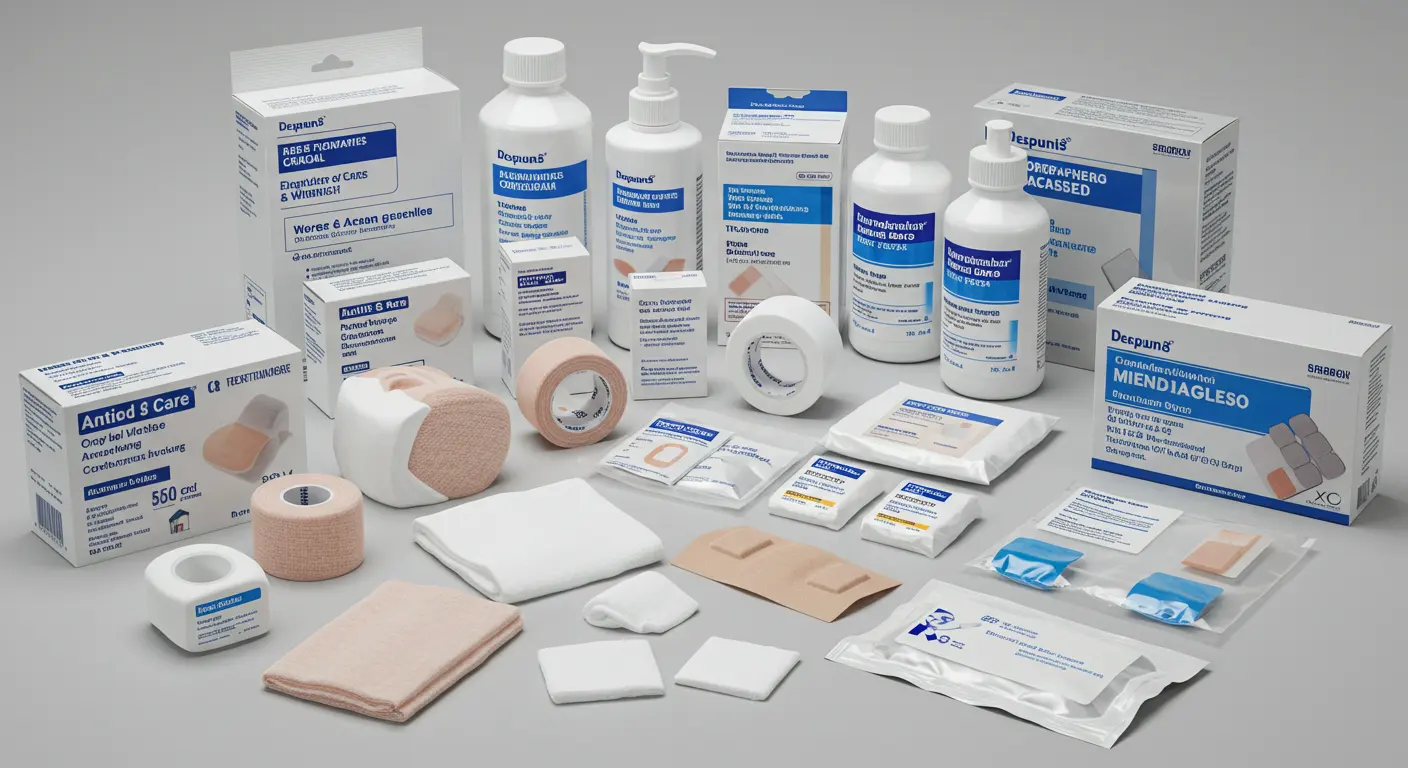
Hospital Dressing Products: Clinical Application
The use of hospital dressing products is broad, including acute injury, chronic wound management, surgical care, as well as infection prevention. Clinical efficiency and patient outcomes require the application of the appropriate type of dressing.
- Acute Wound Care
Patient care wound dressing is needed in acute wounds, which include cuts, abrasions, and lacerations, and helps absorb exudate and prevent infection. Small to medium-sized wounds are covered with adhesive dressings, and more so, deep or bleeding wounds are covered with absorbent sterile dressings.
- Post-Operative Care
Protection of wounds should be done after surgery to ensure that they are not contaminated and heal properly. The surgical dressing applications involve the use of moisture dressing and absorbent dressing as a way of ensuring an optimum healing environment. The appropriate wound dressing methods according to the types of wounds are important to reduce complications in the post-surgery period and the time spent in the hospital.
- Chronic Wound Management
The chronic wounds that develop in patients with diabetes, vascular insufficiency, or chronic immobility are usually associated with the need for special care. The chronic and acute wound management entails the use of water-filled wound dressings, which hasten tissue healing and prevent the chances of infection. Clinical dressing protocols guide the dressing changes so that they provide safe and effective wound care.
- Infection Prevention
One of the main concerns in hospitals is infection control. The approach of infection prevention with hospital dressings protocols using sterile hospital dressings reduces cross-contamination chances. Hospital-grade wound care products are created to offer antimicrobial barriers and, at the same time, remain comfortable to the patient.
The Effective Use of Medical Dressings
Application of medical dressing in hospitals should be done using the right procedures to promote healing. Best practices among healthcare professionals can be listed as follows:
- Evaluate the Wound Type and Size
The depth, the location, and the level of exudate in the wound will allow one to select a dressing type.
- Maintain Sterility
Wearing sterile equipment and gloves should always be used when handling hospital dressing products to prevent contamination.
- That is the Right Dressing Material
When selecting adhesive wound dressings, non-adhesive wound dressings, or absorbent wound dressings, it is important to consider absorbency, adhesion, and moisture retention.
- Follow Clinical Protocols
Adopt a clinical dressing that determines changes in dressing, procedures of cleaning, and monitoring of patients.
- Monitor Healing Progress
Measure wound healing periodically to change the dressing type and frequency. The use of more complex products like hydrocolloids can keep the patient without pain for a few days.
High-Tech Hospital Wound Care Products
The use of advanced wound care products is becoming an important aspect in modern hospitals to achieve better results. These include:
- Antimicrobial Dressings: Decrease microbiologic burden and risk of infection.
- Moisture-Retentive Dressings: Keep the wound hydrated optimally to heal faster.
- Adjustable Dressings: The dressings are aimed at irregular wound shapes, covering them all.
These are the products that constitute the major parts of the medical consumables that facilitate the recovery of patients, hence enhancing the overall efficiency of the hospitals.
Conclusion
What are the appropriate applications for hospital dressing products? The selection of the correct hospital dressing products is vital in the management of wounds, prevention of infection, and improved recovery of the patients. To use high-quality and safe medical dressing applications and needs of the healthcare provider in dressing wounds in hospitals and medical dressing uses, Greetmed Hospital Supplies can offer a wide range of high-quality, sterile, and effective hospital dressing products to the healthcare provider.
Submit Your Request
Recent Posts


Tags
- Adult Diapers
- Are custom medical devices safe
- Baby Diapers
- Can respiratory anesthesia be used
- Digital Healthcare
- Do you offer customized consumables
- European Market
- How do you take care of a skin wound
- Industry Trends
- Lady Sanitary Napkins
- Medical Devices
- OEM Medical Devices
- Product Introductions
- Protective Equipment
- Under Pads
- What are custom-made medical devices
- What are diagnostic products
- What are hospital dressing products
- What are medical tube catheters
- What are some common protective equipment
- What are the appropriate applications for hospital dressing products
- What are the appropriate uses for protective equipment
- What is a gynecological examination
- What is a medical consumable
- What is an anesthesia kit
- What is an OEM in medical devices
- what is an wound skin care
- what is can disposable ultrasonic diagnostic
- What is good manufacturing medical devices
- What is hospital-grade protective equipment
- what is medical equipments hospital furniture
- What is medical sterilization wrapping
- What is rehabilitation equipment device
- What medical consumables do you supply
- Where can I find laboratory consumables wholesale
- where can I find medical protection device
- where to buy hypodermic accessories
- where to buy medical apparel
- where to buy medical consumable accessories
- where to find OEM medical device supplier
- where to find rehabilitation equipment supplier
