



Solve Accuracy Pain: Hypodermic Injection Syringe with Flow Control


The Flow-Control Subcutaneous Injection Syringe is designed to mitigate this variability, making subcutaneous medication delivery more consistent, monitorable, and straightforward to administer. This guide explains why dosing accuracy often drifts in practice, how a Hypodermic Injection Syringe stabilizes flow, how it pairs with disposable infusion pumps, the workflow and compliance gains it can unlock, which clinical data points matter, and how to launch a rapid pilot in your setting.
The Challenge of Dosing Accuracy in Medication Delivery
Across inpatient wards, outpatient suites, and home health visits, clinicians routinely confront dose drift. Back-pressure from tissue, resistance within tubing and connectors, ambient temperature swings, medication viscosity, and human technique all conspire to push the actual delivery rate away from the intended target. Manual syringe pushes are particularly susceptible: pressure peaks, brief pauses, and variable hand speed create an uneven delivery profile, leading to potential under- or over-dosing.
Elastomeric pumps often cite a nominal flow accuracy of approximately ±10% to 15% under controlled temperatures, yet real-world conditions are rarely static. Cooler rooms, cold packs, or refrigerated drugs can slow flow; warmer environments can accelerate it. Viscous formulations and narrow lines add resistance and amplify variability. Clinicians feel the impact most during analgesia titration, antibiotics, oncology regimens, and hydration, where consistent exposure improves outcomes and helps reduce adverse events.
A practical solution needs to dampen pressure fluctuations, minimize rate drift, and make progress visible without adding batteries, screens, or programming. That is the purpose of a Hypodermic Injection Syringe with Flow Control.
What Is a Hypodermic Injection Syringe With Flow Control?
A Hypodermic Injection Syringe with Flow Control is a single-use, pre-sterilized device that delivers medication subcutaneously at a moderated, more stable rate. Inside the hub, a mechanical flow restrictor forms a predictable microchannel that supports laminar flow over the intended dosing window. An optional visual indicator provides immediate confirmation that delivery is ongoing, helping staff spot stalls or occlusions quickly. The syringe is latex-free, compact, and battery-free, making it a fit for hospital bedsides, ambulatory centers, and home care.
Each attribute is designed to translate into tangible benefits for clinical teams and patients:
• Flow control stabilizes delivery rate, reducing the peaks and troughs seen with manual pushes.
• Visual indication enables quick bedside checks and supports continuous documentation.
• Battery-free, programming-free operation lowers training requirements and cuts setup steps.
• Single-use, pre-sterilized construction strengthens infection control and removes reprocessing tasks.
• Lightweight form factor improves portability and patient comfort during ambulation.
Clinical Data and Why Flow Control Matters
Understanding the mechanics behind rate variability helps you select the right device and protocol for your workflows.
- Typical Sources Of Error
Temperature, viscosity, and flow resistance are the main drivers of rate drift. In elastomeric systems, published data often show flow changing roughly 2 - 3% per degree Celsius; cooler ambient conditions slow infusions, while warmer temperatures speed them up. Higher viscosity medications and narrower tubing increase resistance, raising sensitivity to minor environmental changes. When delivery relies on manual syringe technique, operator-dependent pressure and timing are hard to reproduce consistently across shifts, which makes standardized dosing difficult.
- How Flow Control Stabilizes Delivery
The Hypodermic Injection Syringe uses a fixed micro-orifice to promote laminar flow, moderating the delivery profile over the dosing interval. By moderating transient pressure spikes and limiting technique-driven variability, the device supports more stable pharmacokinetics - fewer abrupt peaks and fewer troughs that risk under-delivery. The visual indicator adds a simple, observable status to aid early detection of occlusions or stalls.
In care plans that pair injections with continuous therapy, a Hypodermic Injection Syringe complements the baseline rate from an elastomeric pump. This stabilized micro-delivery helps achieve a more consistent pharmacokinetic profile, which is particularly beneficial when precise adjunct dosing is required alongside a continuous infusion.
Workflow, Safety, and Compliance Gains
Accuracy is only part of the equation. The Hypodermic Injection Syringe with Flow Control reduces complexity and supports policy compliance across care settings. By eliminating the need for batteries, screens, and programming, it reduces setup and training time for nursing and pharmacy staff. A pre-sterilized, single-use build eliminates cleaning and validation, cutting turnaround and simplifying infection control. The compact, quiet device operates without alarms or power cords, enabling delivery in rooms without outlets and during patient movement.
n Cost and Time Savings - Phrasing Options去掉
• Reduced setup and training time compared to programmable systems.
• Eliminates reprocessing costs, avoids consumable power components, and simplifies disposal.
• Faster visual checks that support high-throughput wards and efficient outpatient turnover.
• Fewer interruptions caused by false alarms or battery events.
These efficiencies reinforce adherence to medication safety policies and help standardize processes across shifts and sites. They also align with quality initiatives that reward dose consistency, smart resource use, and lower infection risk.
Integration With Disposable Infusion Pumps for Cohesive Therapy
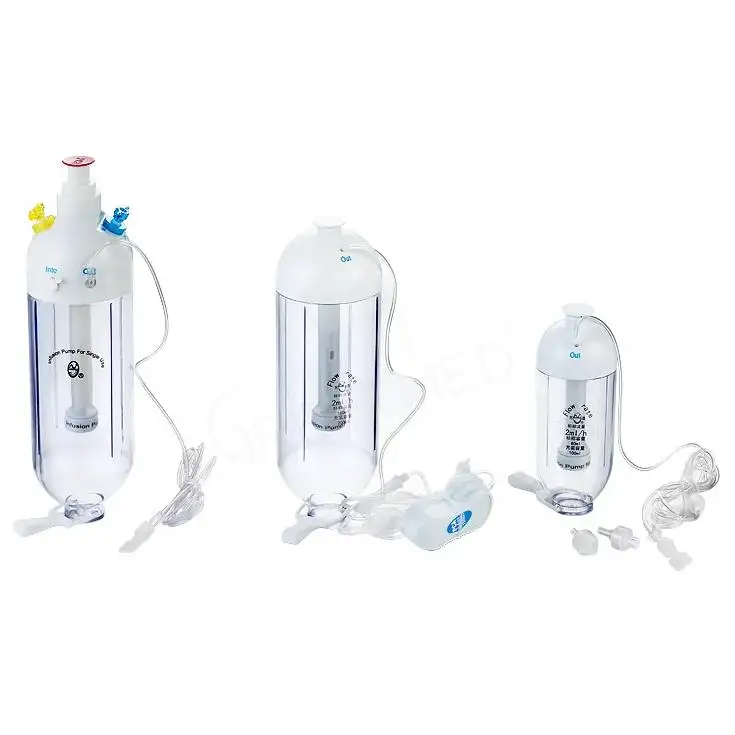
A Hypodermic Injection Syringe is not meant to replace a disposable infusion pump; it complements it. Disposable infusion pumps use an elastomeric balloon and an internal restrictor to provide continuous delivery at a preset rate without electronics or programming. Clinicians select them for pain management, chemotherapy, antibiotics, and hydration because they are portable, battery-free, and suited to hospital, outpatient, and home use. The pump maintains a steady baseline, while the patient can remain mobile during therapy.
n Use Cases Across Care Settings
• Basal rate from a disposable pump; on-the-go precision top-ups via a Hypodermic Injection Syringe during ambulation or transport.
• Post-operative care: controlled, protocol-aligned injections for breakthrough pain without bedside programming.
• Clinic-to-home regimens in oncology and antibiotics: steady exposure complemented by stabilized adjunct dosing.
• Community and home settings: battery-free, cord-free delivery where outlets are scarce.
Together, these devices lessen reliance on manual pushes, smooth exposure profiles, and enhance patient comfort - without adding complexity. Both use medical-grade, latex-free materials and support sterile, single-use workflows to reinforce safety and infection control goals.
Evaluate, Pilot, and Scale - Your CTA
To verify impact in your environment, a structured, short pilot is the fastest path to evidence. Our team supports OEM collaboration and hands-on deployment for the Hypodermic Injection Syringe.
• Request sample kits of the Hypodermic Injection Syringe with Flow Control and compatible disposable infusion pumps.
• Arrange an in-service for nursing and pharmacy on fill, connection, visual confirmation, and documentation tailored for mobile teams.
• Pilot for 2 - 4 weeks in one service line; track setup time in the field, stability versus target rate, occlusion incidents, patient-reported comfort, and caregiver time per patient.
• Align protocols with infection control and charting standards; define success metrics and an escalation plan for scale.
Contact us to initiate an OEM discussion, arrange trials, and design a deployment plan tailored to your pathways. With a Hypodermic Injection Syringe and a disposable infusion pump working in tandem, you can address accuracy pain while improving workflow efficiency, patient experience, and compliance.
Submit Your Request
Recent Posts


Tags
- Adult Diapers
- Are custom medical devices safe
- Baby Diapers
- Can respiratory anesthesia be used
- Digital Healthcare
- Do you offer customized consumables
- European Market
- How do you take care of a skin wound
- Industry Trends
- Lady Sanitary Napkins
- Medical Devices
- OEM Medical Devices
- Product Introductions
- Protective Equipment
- Under Pads
- What are custom-made medical devices
- What are diagnostic products
- What are hospital dressing products
- What are medical tube catheters
- What are some common protective equipment
- What are the appropriate applications for hospital dressing products
- What are the appropriate uses for protective equipment
- What is a gynecological examination
- What is a medical consumable
- What is an anesthesia kit
- What is an OEM in medical devices
- what is an wound skin care
- what is can disposable ultrasonic diagnostic
- What is good manufacturing medical devices
- What is hospital-grade protective equipment
- what is medical equipments hospital furniture
- What is medical sterilization wrapping
- What is rehabilitation equipment device
- What medical consumables do you supply
- Where can I find laboratory consumables wholesale
- where can I find medical protection device
- where to buy hypodermic accessories
- where to buy medical apparel
- where to buy medical consumable accessories
- where to find OEM medical device supplier
- where to find rehabilitation equipment supplier
