



Why Foam Wound Dressings Heal Faster Than Traditional Options


Foam Wound Dressings are soft, medical-grade foam pads that manage wound fluid and protect fragile skin. They absorb exudate, lock it in, and keep the wound moist. Many include a gentle, non-adherent layer and a breathable film that blocks water and bacteria. They mold to curves and feel comfortable during movement. But what actually drives that speed - and when should you choose foam over other dressings? Let's unpack the science and the real-world proof next.
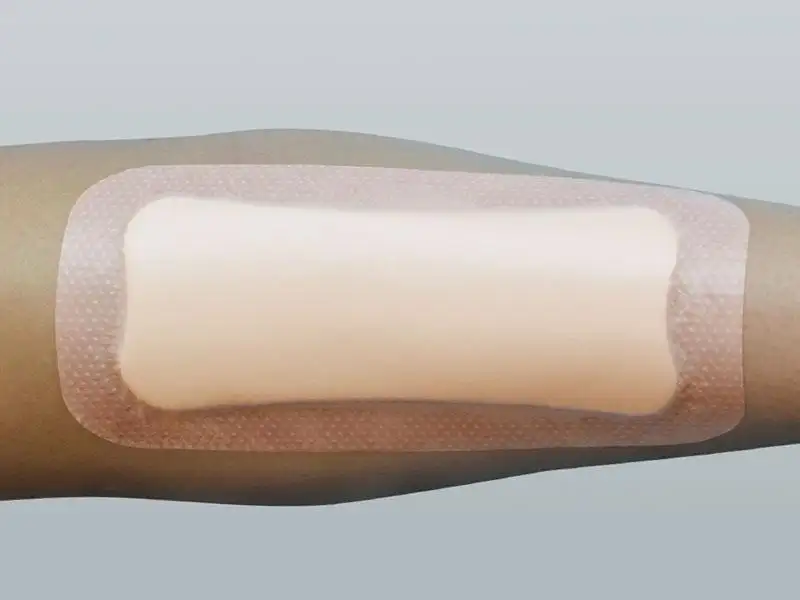
Why They Heal Faster in Real-World Care
At Greetmed, we engineer Foam Wound Dressings to do one job exceptionally well: manage fluid while protecting the wound bed. Our foam is a medical-grade polyurethane blended with CMC. The foam drinks up exudate quickly; the CMC gels and holds it in place. That combination keeps the surface moist - not wet - so granulation can build and epithelium can migrate without interruption.
Traditional gauze behaves the opposite way. It dries out, clings to new tissue, and pulls when you change it. Each painful removal sets healing back. By contrast, the contact layer on our Foam Wound Dressings is non-adherent. It lifts away cleanly, so there's less trauma and less inflammation. That alone can shave days off recovery in routine cases.
Breathability is the second engine of speed. Select Greetmed variants pair the foam with a semi-permeable film that blocks water and bacteria yet lets vapor escape. In testing, moisture vapor transmission around 1.84 g/10 cm²/24 h at 37 °C supports oxygen exchange while preventing desiccation. Add the core's intake capacity—up to ~6.49 g/10 cm²/24 h. Its total holding ability is around ~8.78 g/10 cm²/24 h. This means the dressing handles moderate to heavy exudate without leaking at the edges.
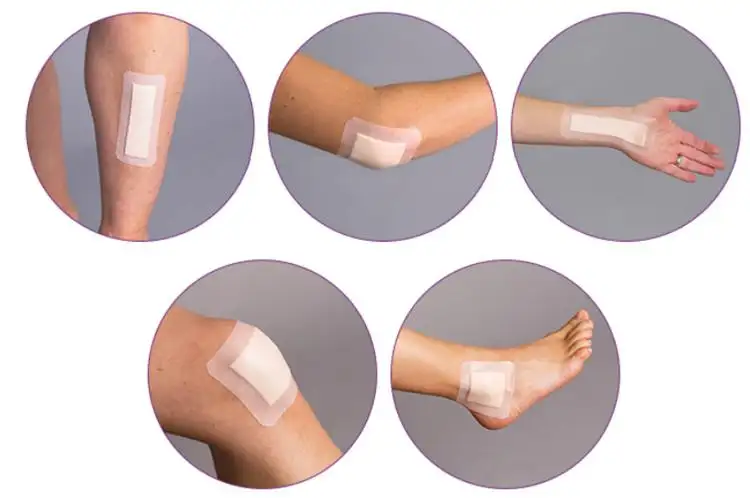
Comfort matters, too. Our 2 - 6 mm foam thickness offers soft cushioning over bony areas, dispersing micro-pressure and friction that can slow the formation of healthy tissue. Patients feel less sting during movement and less anxiety at change time, which improves adherence to the plan of care.
- What This Means at the Bedside?
•Fewer unscheduled changes and fewer wet-bed incidents.
•Lower periwound maceration, cleaner edges, and calmer skin.
•Shorter, simpler dressing changes - less pain, less backtracking.
Where Foam Wound Dressings Make Work Easier
Clinicians reach for Foam Wound Dressings across settings: wards, outpatient clinics, and home care. The dressings adapt to pressure injuries, diabetic foot ulcers, surgical sites, traumatic wounds, and I - II degree burns or scalds. Because the foam molds to contours, it performs well on heels and the sacral region, where a smooth fit prevents shear.
The daily pain points we hear about are consistent: leakage that soils linens, adhesives that strip skin, and frequent changes that eat up nursing time. Greetmed designs address those head-on. Absorbency limits strike-through. A gentle, non-adherent surface protects new tissue. And secure border options help the dressing stay put through daily movement and hygiene routines.
For higher-risk wounds, silver-ion foam can help control bioburden. Meanwhile, the core still manages fluid. Teams often standardize on two or three formats - non-adherent foam, film-topped foam, and bordered foam - then reserve silver for specific cases. This keeps training simple and supplies rooms lean, without sacrificing outcomes.
- Practical Use Tips From Our Clinical Partners
✅Size With Intent: Choose a piece that extends at least 2 cm beyond the wound edge to create a safe margin.
✅Replace On Time: Change when exudate tracks to ~2 cm from the border - before it reaches the edge.
✅Prep The Periwound: Cleanse, pat dry, and use a barrier wipe on sensitive skin.
✅Combine When Needed: Layer with a contact layer or secondary support only if the clinical picture calls for it.
✅Match The Variant: Use silver foam when bioburden is a concern; use film-backed foam when splash resistance is essential.
- Product Options You Can Trust From Greetmed
•Non-Adherent Foam: Atraumatic changes for fragile skin.
•Foam With Polyurethane Film: Breathable, water-resistant shield against external contaminants.
•Self-Adherent (Bordered) Foam: Quick placement, fewer extra supplies.
•Silver-Ion Foam: Added antimicrobial action for at-risk wounds.
Each option shares the same core performance: rapid intake, reliable fluid lock, and gentle removal. That consistency makes protocols easier to teach and follow across shifts.
Inside the Design: the Science Behind the Comfort
Every material choice in Greetmed Foam Wound Dressings traces back to a frontline problem. The porous polyurethane matrix pulls fluid inward fast, then the CMC converts it to a soft, stable gel. With a hygroscopic ratio of 8 or more, the structure keeps moisture from the periwound skin. It also traps odor-causing exudate inside the foam. Patients notice the difference in daily comfort; clinicians notice it in cleaner wound edges and steadier progress photos.
The semi-permeable film option matters in busy environments. It protects against water splashes during hygiene, as well as routine contact with bedsheets and clothing. Yet it remains breathable, so the wound can “breathe” and avoid the crusting or scabbing that stalls epithelial advance. Because the foam is conformable, it hugs curved anatomy and moves with the patient, reducing shear - one of the invisible enemies of healing.
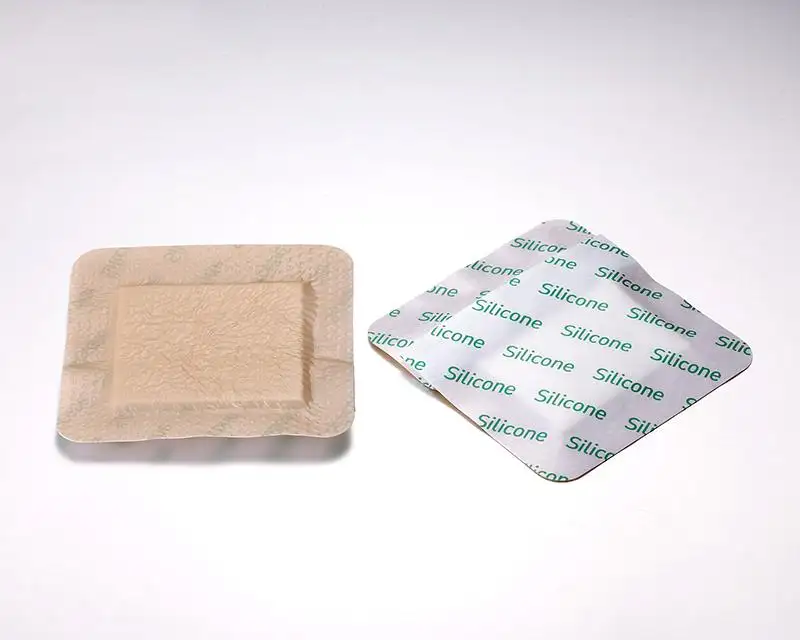
Sizes and shapes address real care needs. They range from standard squares to heel cups and sacral contours. This way, you won't need to improvise with cuts and tape. Where staff efficiency is critical, bordered versions reduce the number of items needed at the bedside and shorten change time. Less fiddling means fewer opportunities for contamination and error.
Just as important, the non-adherent surface prevents the dressing from bonding to the wound bed. You lift, not rip. That keeps the new tissue intact and the inflammatory response low after each change. Over a full episode of care, these small wins add up to faster closure and better patient experience.
- Why This Approach Is Good for Your Budget?
Foam Wound Dressings that truly lock fluid translate to fewer unexpected changes and a lower risk of maceration-related setbacks. When patients are comfortable, they tolerate wear time, which means fewer dressings consumed and less nursing time spent on rework. Standardizing on a clear set of Greetmed formats makes training and inventory easier. It also lets clinicians choose dressings that fit wound needs.
Ready to Trial Greetmed?
Let us send a sample kit and a quick start guide for your team. We'll help you choose the right mix of Foam Wound Dressings, set simple change triggers, and track results like wear time, comfort, and periwound condition. Talk to our clinical specialists today and see how a smarter foam can speed healing - without adding complexity.
Submit Your Request
Recent Posts

Tags
- Adult Diapers
- Are custom medical devices safe
- Baby Diapers
- Can respiratory anesthesia be used
- Digital Healthcare
- Do you offer customized consumables
- European Market
- How do you take care of a skin wound
- Industry Trends
- Lady Sanitary Napkins
- Medical Devices
- OEM Medical Devices
- Product Introductions
- Protective Equipment
- Under Pads
- What are custom-made medical devices
- What are diagnostic products
- What are hospital dressing products
- What are medical tube catheters
- What are some common protective equipment
- What are the appropriate applications for hospital dressing products
- What are the appropriate uses for protective equipment
- What is a gynecological examination
- What is a medical consumable
- What is an anesthesia kit
- What is an OEM in medical devices
- what is an wound skin care
- what is can disposable ultrasonic diagnostic
- What is good manufacturing medical devices
- What is hospital-grade protective equipment
- what is medical equipments hospital furniture
- What is medical sterilization wrapping
- What is rehabilitation equipment device
- What medical consumables do you supply
- Where can I find laboratory consumables wholesale
- where can I find medical protection device
- where to buy hypodermic accessories
- where to buy medical apparel
- where to buy medical consumable accessories
- where to find OEM medical device supplier
- where to find rehabilitation equipment supplier
