



Clinician Guide: Disposable Anesthetic Masks Sizing, Seal, and Comfort


Why Disposable Anesthetic Masks Matter in Daily Practice
Across the OR, ICU, ED, and transport, the interface between face and circuit often determines how smoothly inductions and preoxygenation unfold. Disposable Anesthetic Masks bring predictability to this critical touchpoint. A soft air-cushion molds to individual contours so you can achieve an airtight seal with less pressure.
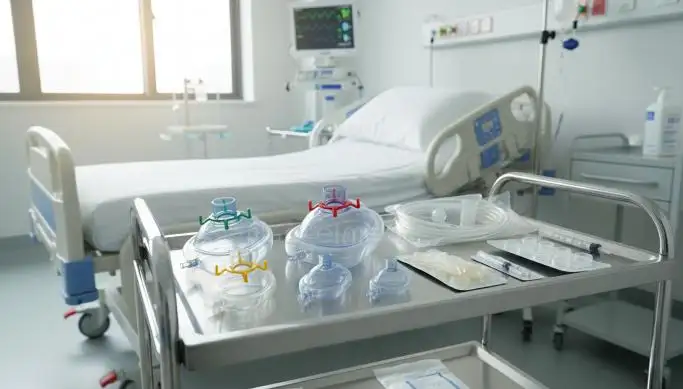
A transparent dome lets clinicians track lip color, fogging, secretions, and alignment without breaking focus. A universal 22 mm connector snaps directly onto anesthesia machines, ventilators, oxygen sources, and BVM systems, trimming setup steps and limiting disconnections. When masks are made from non-toxic PVC and are 100% latex-free, you reduce skin irritation and allergy concerns for patients and staff. Individually packed PE bags support clean storage and fast restocking - exactly what busy airway carts and emergency trolleys need.
Getting Size Right: From Neonates to Large Adults
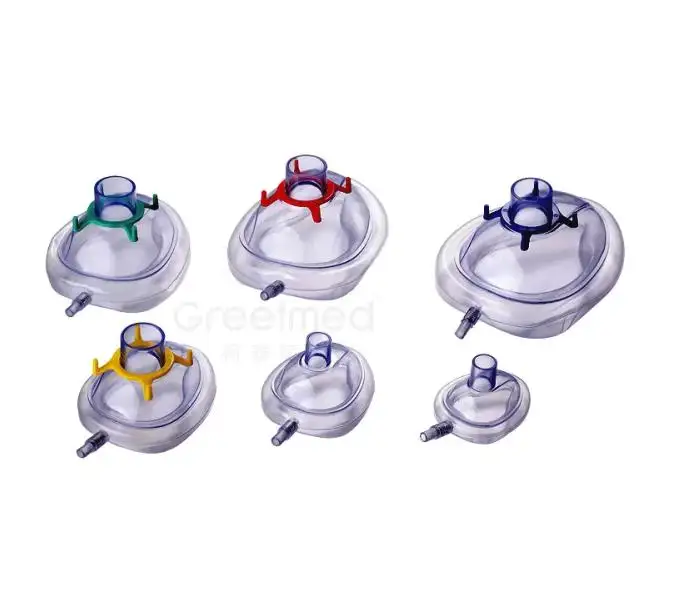
Sizing is the first and simplest guard against leaks, pressure marks, and wasted anesthetic gases. Disposable Anesthetic Masks are typically available from neonate to adult large, allowing a precise fit whether you're inducing anesthesia, managing short procedures, or performing transport ventilation.
A quick bedside sizing method:
•Align mask length from the nasal bridge to the tip of the chin without compressing soft tissue.
•Seat the cushion on bony landmarks; avoid the eyes and lips.
•Confirm the rim does not impinge on the nasal ala or distort the nares.
In pediatrics, slightly downsizing and keeping strap tension minimal often improves acceptance and reduces leak during spontaneous breathing. Clear size labels or color cues accelerate selection when seconds matter. On the logistics side, predictable carton quantities (for example, pediatric 30 per carton and adult medium 50 per carton) make forecasting easier for mixed case lists and on-call coverage, without overloading storage shelves.
Build a Better Seal and Control Leaks
A dependable seal protects both patients and staff. It preserves target FiO2 and volatile concentrations, improves the consistency of induction, and limits room contamination from waste anesthetic gas. With well-designed Disposable Anesthetic Masks, airtightness is achievable at lower contact pressures when clinicians apply proven techniques.
Practical techniques that work:
•Lead With The Nose: Place the narrow end at the nasal bridge first, then roll the mask down toward the chin to smooth skin folds and eliminate gaps.
•Use A Two-Hand EC Clamp: Lift the mandible and bring the face to the mask rather than forcing the mask into the face. If possible, ask a second person to ventilate during induction.
•Troubleshoot By Scenario: For beards, apply a light water-soluble gel coat, insert a small gauze pad, or choose a larger cushion. For edentulous faces, reinforce the chin and consider an oral airway to reestablish facial contours. At high NIPPV flows, verify mask size and refine hand positioning.
•Keep Straps Supportive, Not Crushing: The air-cushion should create the seal; over-tightening can increase pressure marks and paradoxically worsen leaks.
•Choose Low-Odor, Latex-Free Options: Reduced odor lessens aversion and breath-holding, especially in anxious adults and children.
Materials, Safety, and Universal Compatibility
Material choice isn't cosmetic - it shapes outcomes. Non-toxic PVC that meets biocompatibility standards reduces irritation and builds confidence for repeated use across a shift.
•A 100% latex-free build removes the risk of latex reactions for patients and personnel. Soft, pliable cushions allow you to achieve an effective seal with a lighter touch, which can shorten time to target FiO2 or end-tidal volatile concentration while reducing facial pressure marks.
• Low-odor designs encourage acceptance and steadier breathing patterns. The fully transparent dome enables nonstop monitoring of fine cues - fogging, secretions, and lip color - so teams can adjust in time.
•The universal 22 mm port integrates with standard circuits and BVMs, helping avoid extra adapters and unintended disconnects.
•Adherence to CE, ISO 13485, and FDA requirements streamlines buying, supports audit processes, and aids standardization across hospitals and remote clinics. Single-unit PE packaging enhances clean handling, lot traceability, and bedside replenishment.
Comfort and Pediatric Acceptance
Comfort improves cooperation, lowers leaks, and advances the quality of preoxygenation. Disposable Anesthetic Masks with soft seals and low odor are easier to accept during mask-first induction and during short procedures under sedation. For children, a calm, transparent interface that keeps the face visible supports reassurance and coaching. Brief desensitization goes a long way: let a child hold the mask, introduce a friendly scent near the dome, and use play-based distraction to encourage gentle breaths. For adults, avoid excessive strap tension, reposition contact points during longer cases, and check early for pressure areas to protect skin integrity. Across age groups, a light, well-contoured touch maintains target end-tidal values without creating a sense of smothering.
Real-World Tips for Challenging Faces
•Bearded Adult: Select a slightly larger cushion, apply a thin water-soluble gel layer, and use the two-hand technique to stabilize EtSevo rapidly while minimizing room odor.
•Edentulous Patient: Add an oral airway to re-establish structure, support the mandible, and lift the face into the mask to avoid leaks.
•High BMI Or Prominent Cheeks: Re-position hands to improve mandibular lift and check that the cushion isn't riding onto the soft tissues near the eyes.
•Anxious Preschooler: Use low-odor materials, downsize slightly, and coach through the transparent dome with calm, simple cues.
Inventory And Procurement That Actually Work
Even the best mask only helps if it's on hand. A clear stocking plan keeps Disposable Anesthetic Masks within arm's reach at points of care in the OR, ICU, ED, and transport kits. Individually bagged PE units simplify counting and tamper-sealed restocking, while standardized SKUs limit training variability and reduce waste.
Build a Resilient Supply
•Stock The Full Size Range: Keep inventory from neonate to adult large, with at least one backup per expected case in frequently used sizes.
•Choose Predictable Carton Quantities: Common carton packouts (e.g., 30 or 50) support budgeting, shelf organization, and auto-reorders.
•Standardize On Compliant SKUs: Select CE/ISO 13485/FDA-aligned SKUs to cut approval friction and maintain audit consistency.
•Use OEM Customization If Helpful: Implement private labels, color size cues, or pack formats aligned to your bins and pick paths to reduce search time and errors.
•Align Cross-Department Standards: Using one mask ecosystem across anesthesia, ICU, ED, and transport reduces SKUs, streamlines training, and lowers per-unit costs.
Training, Metrics, and Continuous Improvement
Turning features into outcomes requires short, practical training and a handful of meaningful metrics. Keep sessions brief and hands-on, using realistic scenarios: size selection at the bedside, two-hand EC clamp technique, troubleshooting beards and edentulous faces, strap management, and pediatric rapport. Then measure what matters:
•Time To Target FiO2 And End-Tidal Volatile Concentrations
•Frequency Of Leak Alarms Or Capnogram Irregularities
•Incidence Of Facial Pressure Marks Or Patient Complaints
•Mask Changeouts Or Adapter Use During Cases
Use these insights to refine stocking levels, adjust training, and optimize mask placement so Disposable Anesthetic Masks are always where clinicians reach first.
Try, Measure, And Standardize: A Practical Next Step
If you want predictable seals, calmer inductions, and fewer workarounds, start with a small, structured trial. Compare Disposable Anesthetic Masks head-to-head in your workflows, track seal quality and time to target FiO2, and gather quick feedback from staff on odor, comfort, and ease of connection. Offer focused micro-training on sizing, leak mitigation, and pediatric acceptance, then lock in a stocking plan that matches real utilization - ORs, airway carts, trauma bays, and ambulances included.
Call To Action
Request a clinical evaluation set to benchmark seal performance, patient comfort, and setup time in your environment. Schedule targeted skills refreshers on mask sizing, the EC clamp, and pediatric strategies. Connect with our team for OEM customization, compliance documentation, and coordinated procurement. Standardize Disposable Anesthetic Masks across your network with non-toxic PVC construction, 100% latex-free materials, soft air cushions, low-odor designs, transparent domes, universal 22 mm connectors, and individually packed PE bags. Equip clinicians - and reassure patients - with better sizing, better seals, and better comfort, case after case.
Submit Your Request
Recent Posts


Tags
- Adult Diapers
- Are custom medical devices safe
- Baby Diapers
- Can respiratory anesthesia be used
- Digital Healthcare
- Do you offer customized consumables
- European Market
- How do you take care of a skin wound
- Industry Trends
- Lady Sanitary Napkins
- Medical Devices
- OEM Medical Devices
- Product Introductions
- Protective Equipment
- Under Pads
- What are custom-made medical devices
- What are diagnostic products
- What are hospital dressing products
- What are medical tube catheters
- What are some common protective equipment
- What are the appropriate applications for hospital dressing products
- What are the appropriate uses for protective equipment
- What is a gynecological examination
- What is a medical consumable
- What is an anesthesia kit
- What is an OEM in medical devices
- what is an wound skin care
- what is can disposable ultrasonic diagnostic
- What is good manufacturing medical devices
- What is hospital-grade protective equipment
- what is medical equipments hospital furniture
- What is medical sterilization wrapping
- What is rehabilitation equipment device
- What medical consumables do you supply
- Where can I find laboratory consumables wholesale
- where can I find medical protection device
- where to buy hypodermic accessories
- where to buy medical apparel
- where to buy medical consumable accessories
- where to find OEM medical device supplier
- where to find rehabilitation equipment supplier
