



How Breathing Circuits for Anesthesia Reduce Cross-Contamination


Anesthesia Breathing Circuits For Anesthesia sit at the heart of breaking the cross-contamination chain in operating rooms, day-surgery suites, and veterinary theaters. From Greetmed's perspective as a manufacturer, the priority is simple: give clinicians dependable, easy-to-assemble circuits that integrate smoothly with real workflows.

Why Cross-Contamination Persists in Anesthesia Workflows
Infection risks rarely come from a single dramatic failure. They creep in through small lapses: a connector that doesn't seat fully, a mislabeled part pulled during a turnover, a circuit reused beyond policy because a case starts late. Breathing Circuits For Anesthesia must ventilate precisely while limiting exposure to exhaled moisture and pathogens. Circle (rebreathing) and non-rebreathing systems face different vulnerabilities, yet the objective remains steady - reliable gas delivery, efficient CO₂ removal, and fewer opportunities for contamination.
At Greetmed, we watch the same patterns across institutions of all sizes. Extended procedures stress seals and make every disconnection a risk. Pediatric rooms need light, kink-resistant tubing that doesn't tug at the airway. Mixed inventories force workarounds that invite leaks. Rotating teams require visual guidance so that the circuit goes together right the first time, even under time pressure. Our answer focuses on the details that matter most - standardized parts, clear cues, and streamlined assembly that keeps hands off the airway.
✅ Common Pain Points We Hear
• Frequent connector swaps create extra touch points and error risk
• Mixed brands cause fit issues, leading to unintended leakage
• Reuse policies vary by shift, undermining hygiene consistency
• Bulky tubing drags on the airway and disrupts patient positioning
The fix is not complicated. It must be consistent. When products fit cleanly and look familiar across rooms, staff handle them less, connect them faster, and move on with confidence.
How Greetmed Circuits Interrupt the Transmission Chain
Greetmed designs Breathing Circuits For Anesthesia to limit aerosol spread and reduce handling without complicating setup. A typical anesthesia breathing circuit includes flexible tubing, connectors, a reservoir bag, and - when required - a filter or humidifier. Circle systems add one-way valves and CO₂ absorbers so patients can rebreathe after CO₂ removal. Non-rebreathing circuits deliver fresh gas on every breath and are often chosen for pediatric or shorter cases. The engineering goal is steady flow with fewer opportunities for unnecessary breaks in the circuit.
✅ Design Choices That Matter at the Bedside
• Construction options: L connector, three-way connector, breath air chamber, and solenoid - configured to simplify routing so staff disconnect less often
• Universal connectors: Promote compatibility and reduce leak-prone improvisation when the room turns over quickly
• Optional filtration/humidification: Supports anesthesia circuit infection control policies without forcing new routines
• Clear labeling and color cues: Guide correct assembly across shifts and teams
• Kink-resistant, lightweight tubing: Maintains flow while lowering drag at the airway
These choices are backed by quality systems and certification - CE/ISO13485/FDA - and we accept OEM to match hospital or distributor standards. For buyers standardizing across departments, Greetmed can supply single-use anesthesia breathing circuit options to keep turnaround predictable and minimize cross-handling between cases.
✅ Circle vs. Non-Rebreathing: Choosing Wisely
Selection should reflect patient size, case duration, and machine compatibility. Circle circuits, favored in longer adult procedures, can stabilize gas use once CO₂ is absorbed. Non-rebreathing circuits, preferred for shorter or pediatric cases, keep fresh gas moving with every breath and reduce the complexity of valves and absorbers. In both paths, the same rules apply: a secure seal, minimal touch points, and components that look and behave the same from room to room. Greetmed's role is to help teams standardize SKUs so clinicians encounter familiar connectors and a predictable layout wherever they work.
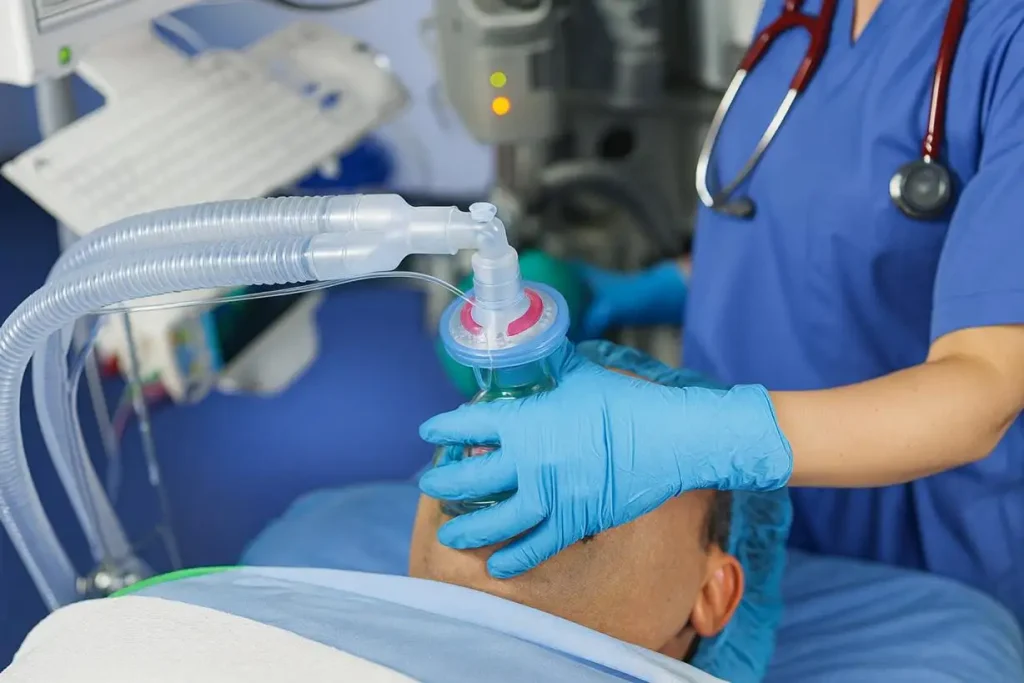
Implementation That Sticks: From Setup to Scale
A circuit can only protect as well as it is applied. Packaging that opens cleanly, parts that click with tactile feedback, and labels that are obvious from an arm's length away - these are the small advantages that prevent last-minute substitutions. Greetmed collaborates with clinical educators to align circuit selection with local infection-control policies and with existing anesthesia machines. The result is fewer open joints during induction and fewer mid-case adjustments that add risk without adding value.
✅ Setup Practices That Shrink Touch Points
• Inspect packaging and seals before the case; verify the intended circuit type
• Assemble with a "one-pass” mindset; confirm each connector locks firmly
• Place filters or humidifiers as policy requires; run a flow check before draping
• Avoid unnecessary disconnections; replace components as complete units
• Document circuit type and any deviations for post-case quality review
Turnover speed matters, but predictability matters more. When teams know that every room stocks the same layout - same L connectors, same reservoir bag fit, same three-way connector orientation - they spend less time adapting and more time watching the patient. That is where safety lives.
✅ Procurement and Training, Working Together
Many facilities are moving toward integrated purchasing to reduce variability. In addition to circuits, Greetmed provides disposable gloves, masks, syringes, urine bags, and other commonly used items. A single accountable partner simplifies checks and keeps training consistent. Staff do not have to relearn basic steps with every shipment. They can focus on the key goal: maintaining a clean, closed path from machine to patient and back again.
Call to Action - Partner with Greetmed
If your facility is revisiting standards for Breathing Circuits For Anesthesia, start with a small, measurable pilot - one OR, one pediatric bay, one PACU zone. Track leak checks, setup time, and device touches per case. Greetmed's engineering and clinical support teams will help you review the results and plan a rollout matched to your budget and compliance requirements.
Ready to reduce cross-contamination risks and streamline turnarounds? Contact Greetmed for samples, OEM options, and a tailored configuration of Breathing Circuits For Anesthesia aligned with your infection-control goals. Together we can build a safer, more consistent anesthesia pathway - case after case.
Submit Your Request
Recent Posts



Tags
- Adult Diapers
- Are custom medical devices safe
- Baby Diapers
- Can respiratory anesthesia be used
- Digital Healthcare
- Do you offer customized consumables
- European Market
- How do you take care of a skin wound
- Industry Trends
- Lady Sanitary Napkins
- Medical Devices
- OEM Medical Devices
- Product Introductions
- Protective Equipment
- Under Pads
- What are custom-made medical devices
- What are diagnostic products
- What are hospital dressing products
- What are medical tube catheters
- What are some common protective equipment
- What are the appropriate applications for hospital dressing products
- What are the appropriate uses for protective equipment
- What is a gynecological examination
- What is a medical consumable
- What is an anesthesia kit
- What is an OEM in medical devices
- what is an wound skin care
- what is can disposable ultrasonic diagnostic
- What is good manufacturing medical devices
- What is hospital-grade protective equipment
- what is medical equipments hospital furniture
- What is medical sterilization wrapping
- What is rehabilitation equipment device
- What medical consumables do you supply
- Where can I find laboratory consumables wholesale
- where can I find medical protection device
- where to buy hypodermic accessories
- where to buy medical apparel
- where to buy medical consumable accessories
- where to find OEM medical device supplier
- where to find rehabilitation equipment supplier
